I don’t hike to suffer. I hike because I enjoy being outside, moving at a pace my body agrees with, and waking up in a tent to whatever’s happening out there that I didn’t plan. Suffering is optional. Weight, unfortunately, is not.
When I started looking at ultralight gear, I assumed it was a world built for obsessives with titanium sporks and color-coded spreadsheets. It is, a bit. But underneath the cult content there’s a practical truth: carrying less hurts less. For those of us hiking on bodies with opinions — knees that keep score, energy budgets that don’t reset overnight — that’s not a minor point.
The sleep system is where the serious money usually goes. For good reason: bad sleep on trail doesn’t just make the morning unpleasant. It compromises everything that follows. But “invest in your sleep” doesn’t have to mean €400 (~$440) for a brand-name sleeping pad and €350 (~$385) for a down bag from a company that expects you to have opinions about high-altitude mountaineering.
I went looking for the middle ground. Here’s what I found.
Sleep Is Where Your Trip Is Won or Lost
Every gram you carry costs energy. Multiply that across a day on trail and you start to understand why ultralight hikers track grams rather than kilograms. The sleep system — bag or quilt, sleeping pad, maybe a liner — is typically the heaviest category in your pack and also the one that determines whether you arrive at day two feeling human.
Good sleep on trail is recovery. Muscles repair overnight, feet stop complaining, your head resets. For hikers who go out a handful of times a year on multi-day trips, mostly in decent weather, the question isn’t whether to invest in a good sleep system. It’s whether that investment has to mean spending €700 (~$770) on it.
The expensive brands make good gear. But is the premium justified if you’re out four times a year? There are alternatives — not cheap compromises, but honest budget options that perform where it counts.
The Gear I Actually Use
AEGISMAX Wind Hard Twilight 0° — 800 Fill Power Down, Without the Story Tax
Buying this sleeping bag was part curiosity, part calculated gamble. I was looking for a down bag with a genuine 0°C (32°F) comfort rating, light enough to matter, priced somewhere below “named after a glacier.”
AEGISMAX is a Chinese brand. Most Western outdoor retailers have never heard of them, and they’re not sponsoring anyone’s Instagram feed. That’s fine. Fill power is a measurable number, not a brand feeling: it describes how well an ounce of down lofts, and loft is what traps warm air. 800 FP is 800 FP — it’s what Marmot uses in its premium bags. It’s also what AEGISMAX uses. The price difference is considerable.
These bags run around €150 (~$165) each. At that price, a genuine 0°C (32°F) rating and a weight of 509 g (17.9 oz) are not what you’d usually expect. If they deliver on both — and based on my testing, they do — that’s a straightforward argument against paying three times as much for a logo and a better return policy.
One note on fill power, since it comes up constantly in ultralight circles: higher FP means better insulation per gram, which means a lighter bag for equivalent warmth. Below 650 FP, down bags get heavy fast. At 800 FP, you’re in the same thermal territory as what sits in the premium section of any outdoor shop. What you’re paying extra for there is the brand story, the warranty support, and the comfort of buying from a name you recognize.
All worth something. Rarely worth €200 (~$220) more.
Featherstone Calcatta Air R-5.6 — The Sleeping Pad I Didn’t Know I Needed
I didn’t know R-values existed until I started researching ultralight gear properly. Once I did, I couldn’t unknow them.
The short version: a sleeping pad’s R-value measures thermal resistance — how effectively it blocks cold ground from pulling heat out of your body from below. It matters more than most hikers realize. A sleeping bag handles the warmth above you. The pad handles the ground. Get the pad wrong and you’ll be cold in a €350 (~$385) bag.
Important distinction worth repeating: a sleeping bag doesn’t generate heat. It retains the heat your body produces. If you go to bed cold, you’ll stay cold. Warm up before you get in — move around, put on your layers, make a hot drink. That’s not a brand problem, that’s physics.
I found the Featherstone Calcatta Air in Featherstone’s outlet store for about €92 (~$99 — Featherstone is a US brand, the outlet sticker was in dollars). An R-5.6 pad at that price is unusual. For context: the Therm-a-Rest NeoAir XTherm, long considered the benchmark for insulated inflatable pads, comes in at R-7.3 and costs around €220 (~$240). The NeoAir XLite — lighter, less insulated at R-4.5 — runs about €190 (~$210).
When the Featherstone arrived and I inflated it for the first time, I held my cheek close to the surface and felt my own warmth radiating back toward me. A small detail. Also exactly what R-5.6 looks like in practice.
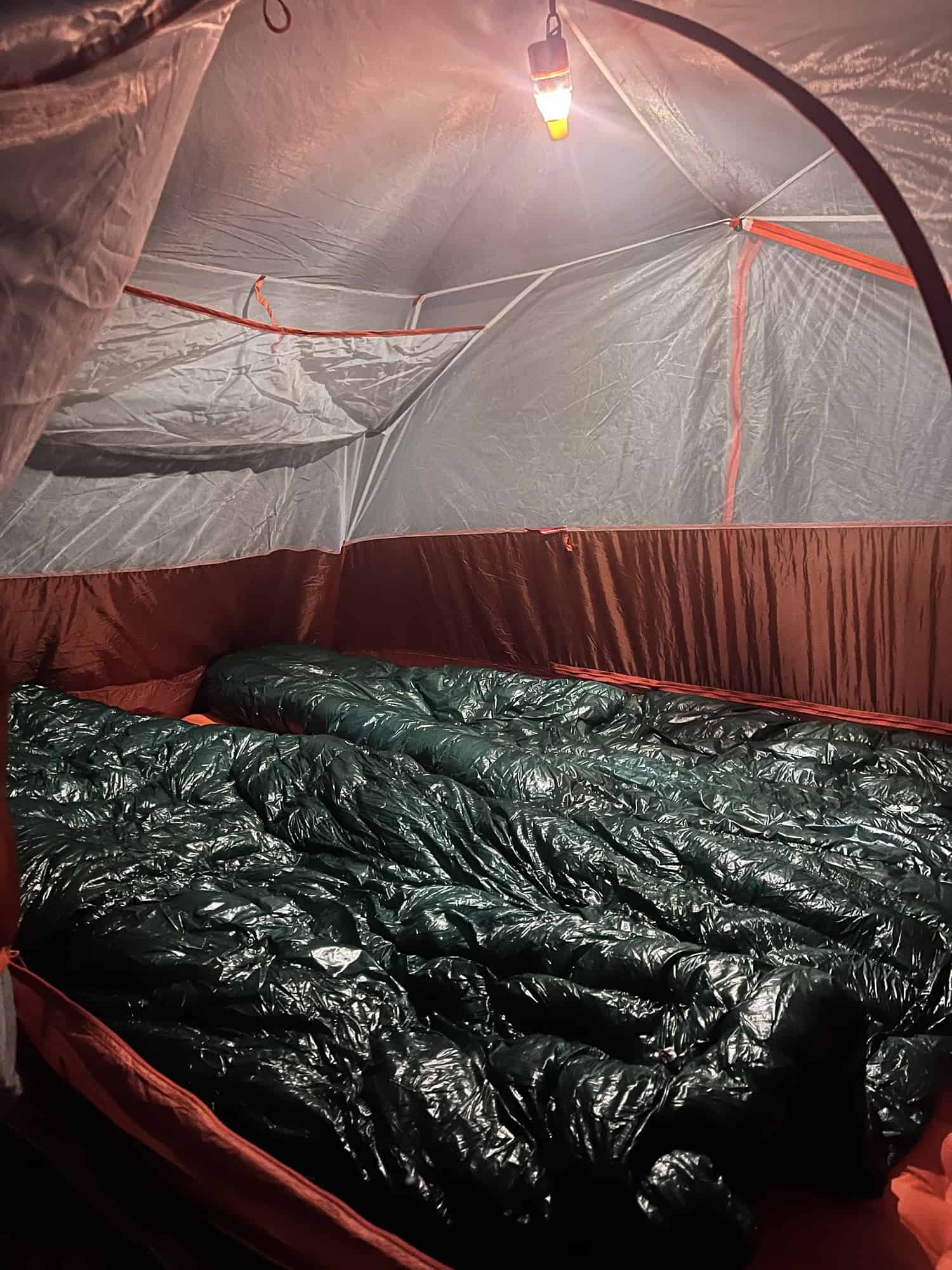
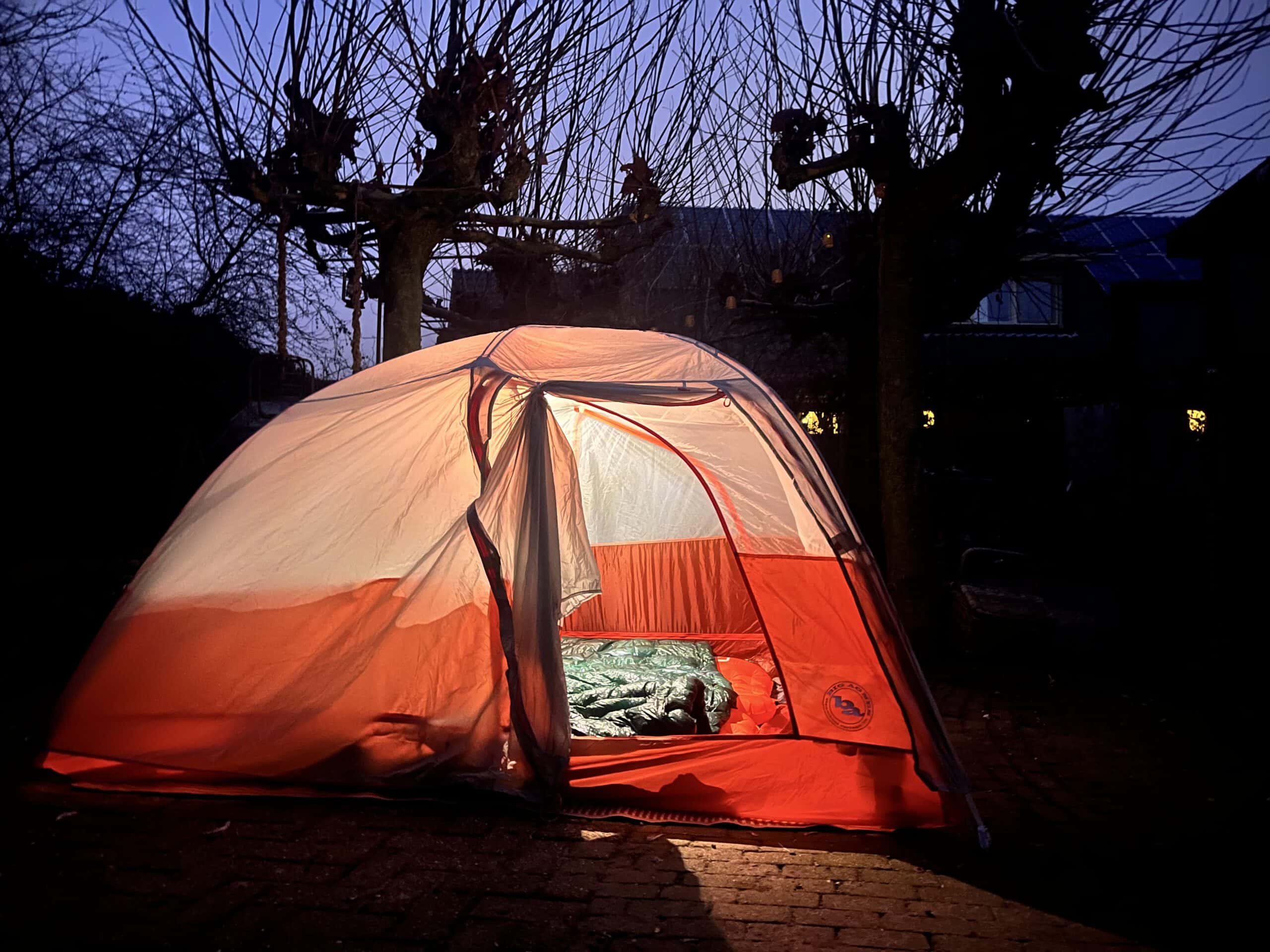
I tested the complete setup — bag and pad together — in my garden overnight at around 1°C (34°F). I went in prepared: baselayer, fleece, beanie, buff, and a Nalgene filled with hot water tucked into a sock as a low-tech hot water bottle. The fleece came off within an hour. The hot water bottle stayed in my pack, untouched. At 6am — the coldest point of the night — I woke briefly, pulled on thick socks, layered the fleece back on, and slept until nine.
It held.
The Numbers
| Budget option | Premium equivalent | |
|---|---|---|
| Sleeping bag | AEGISMAX Wind Hard Twilight 0° | Enlightened Equipment Revelation 0° |
| Weight | 509 g (17.9 oz) | ~454 g (16.0 oz) |
| Price | ~€150 (~$165) | ~€290 (~$320) |
| Sleeping pad | Featherstone Calcatta Air | Therm-a-Rest NeoAir XTherm |
| Weight | 645 g (22.8 oz) — trail weight | 430 g (15.2 oz) |
| R-value | 5.6 | 7.3 |
| Price | ~€92 (~$99) — outlet | ~€220 (~$240) |
| Combined weight | 1,154 g (2.5 lb) | 884 g (1.9 lb) |
| Combined cost | ~€242 (~$265) | ~€510 (~$560) |
The gap: 270 g (9.5 oz) and €268 (~$295). Whether that’s a reasonable trade depends on how often you’re out, what conditions you hike in, and how much satisfaction you get from owning the objectively better version of a thing.
What You Give Up
Less than you’d expect.
The AEGISMAX bags are less known, which means customer service is less straightforward than with an established brand. Warranty claims from Europe can be slow. The bags are down, not synthetic — they perform poorly if they get wet, which is standard down advice regardless of what’s written on the label. Keep them dry, store them uncompressed, and treat them the way you’d treat any good down product.
The Featherstone pad is heavier than the premium alternatives. Trail weight of 645 g (22.8 oz) versus the NeoAir XLite’s 354 g (12.5 oz) is a real 291 g (10.3 oz). If shaving base weight is your primary goal, that difference is meaningful. For a few trips a year in three-season conditions, it’s weight I’ve stopped worrying about.
What you don’t give up: warmth, a full night’s sleep, and the ability to spend that €268 (~$295) on something else.
Who This Kit Is For
If you go out regularly in unpredictable alpine conditions, sleep cold by nature, or are working toward winter routes — this combination might not be the right call. There’s more capable gear at higher prices, and the gap is real in those conditions.
If you’re hiking three seasons, mostly fair weather, on multi-day trips at distances that are comfortable for you — this covers you. The sleep system is the wrong place to cut performance. It’s a reasonable place to cut brand premium.
Affiliate disclosure: Everything here I bought and tested myself. If you click through and buy, I get a small cut at no extra cost to you.